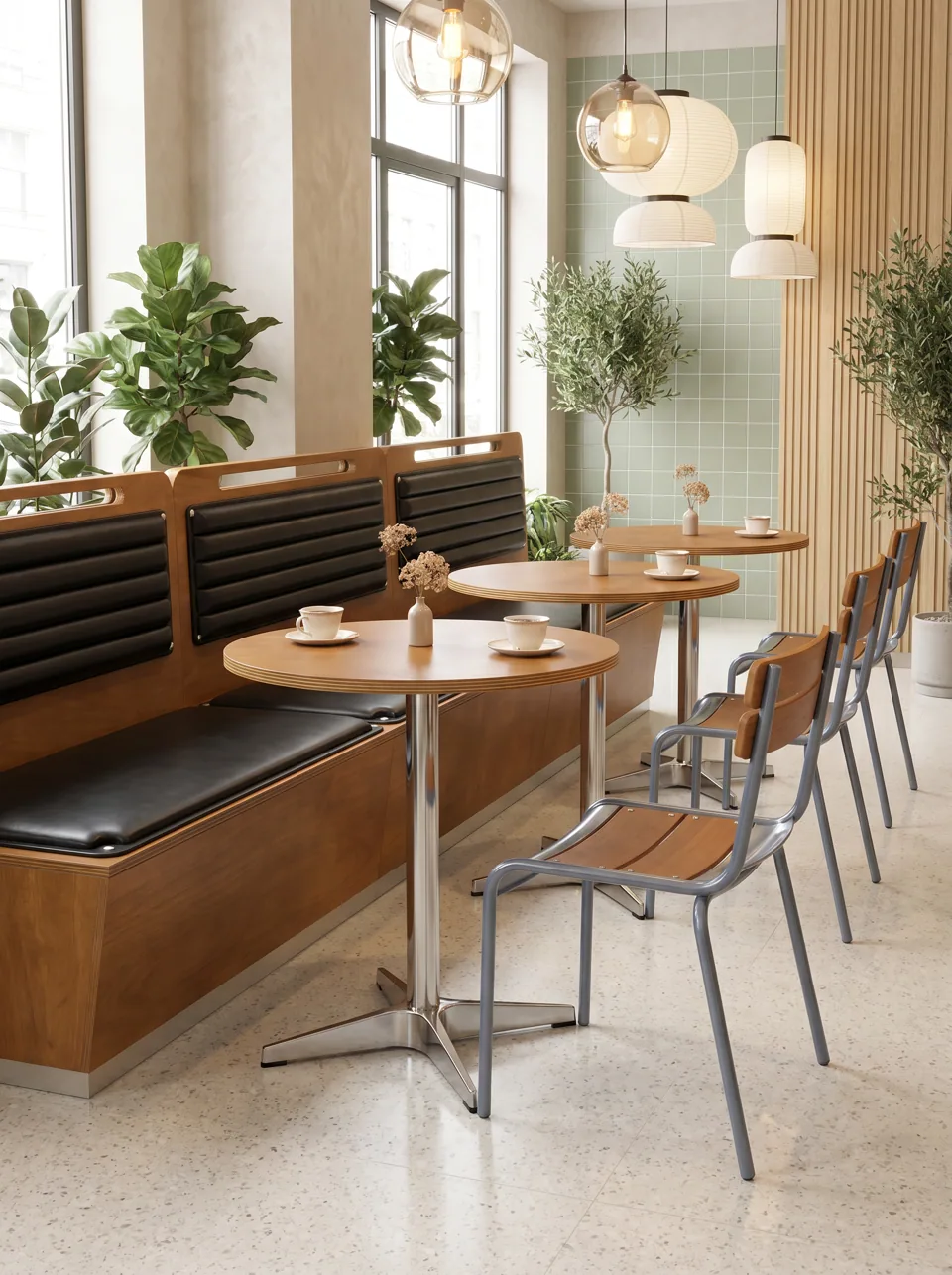
A booth in a busy quick-service room takes far more abuse than one in a full-service restaurant: more sit-downs per day, more spills, more wipe-downs with sanitizer, and more contact from strollers, carts and mop buckets. These booths are designed for that use and for being repaired rather than replaced.
Design features that cut cleaning time and replacement cost:
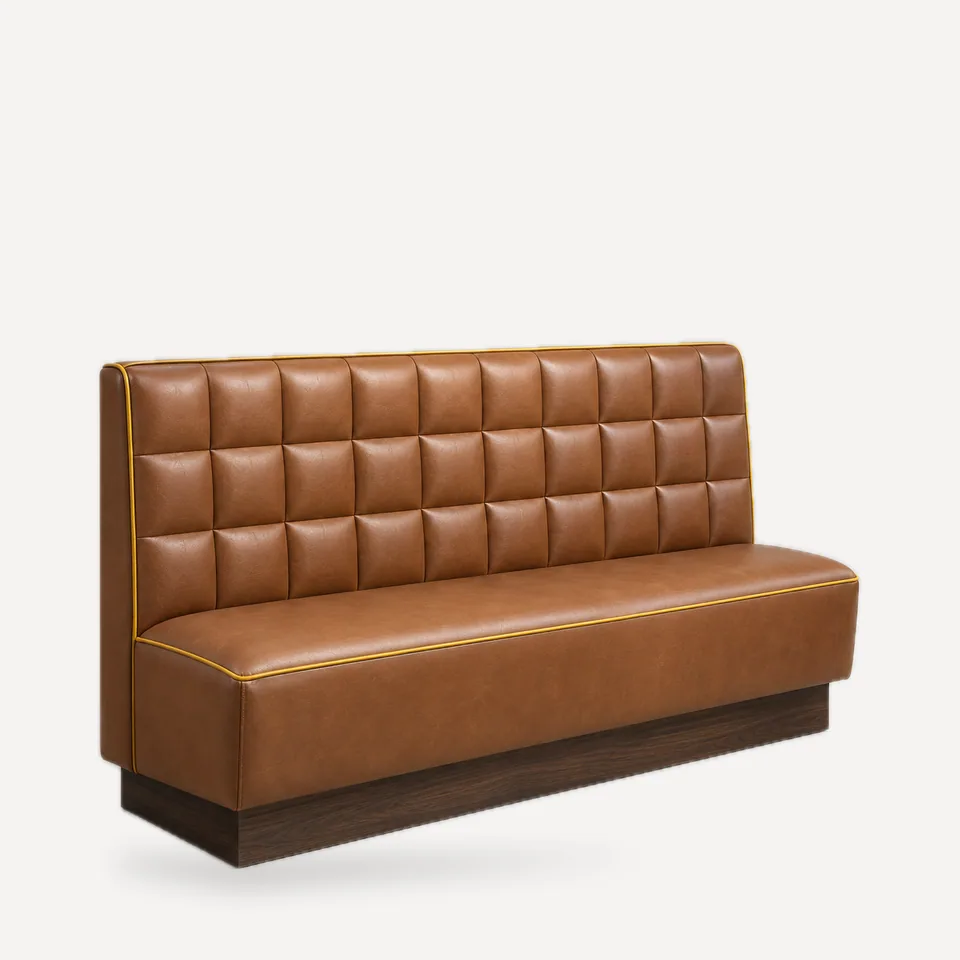
- No buttons on seats. Biscuit and channel patterns are stitched flat, so crumbs and grease have nowhere to hide.
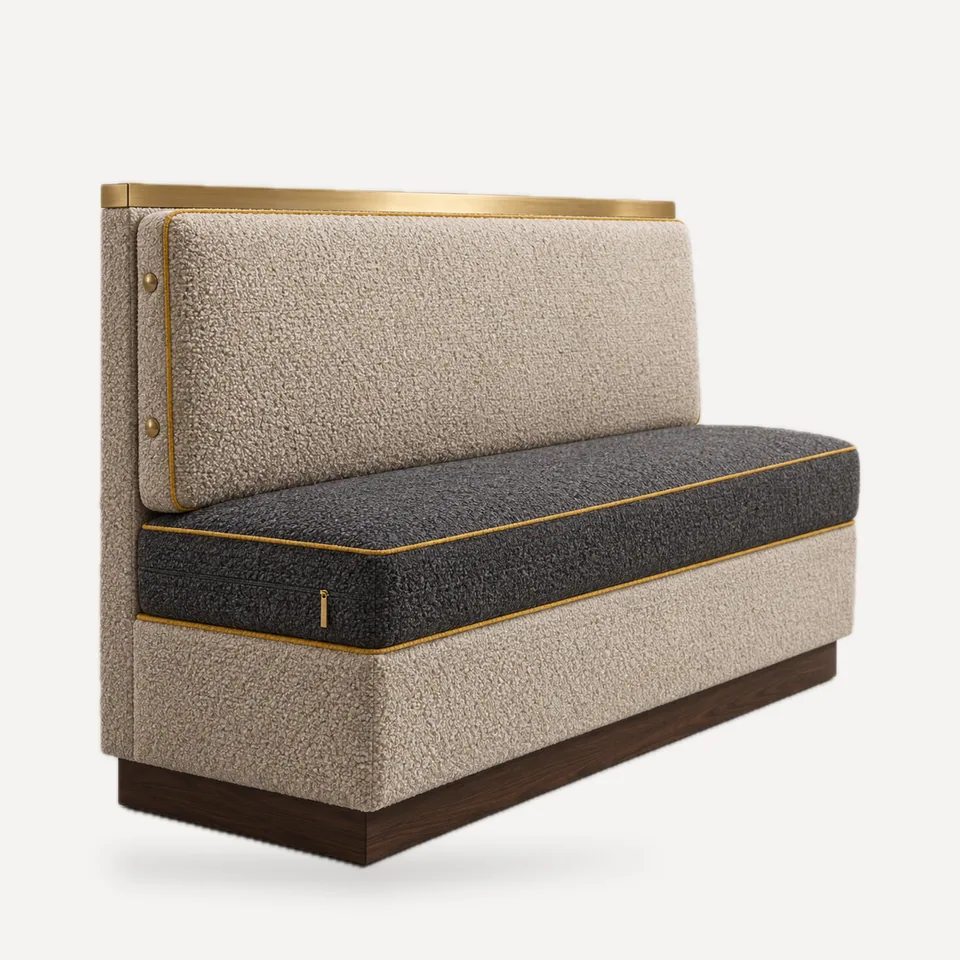
- Crumb gap. A gap between seat and back lets crumbs fall through instead of packing into the crease.
- Removable cushions. Seat and back cushions unscrew or unzip so a damaged cover is swapped in minutes.
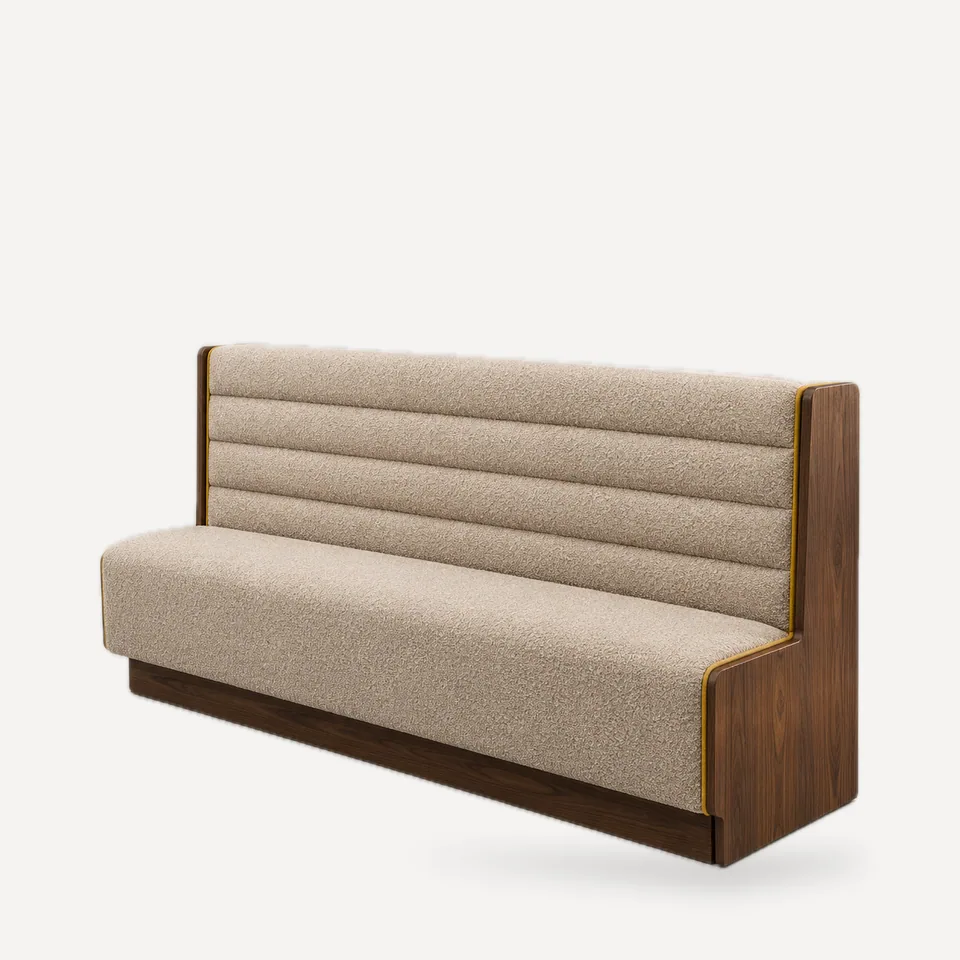
- Hard ends. Solid-wood end panels or guarded ends take the knocks at the aisle; wood can be sanded and refinished.
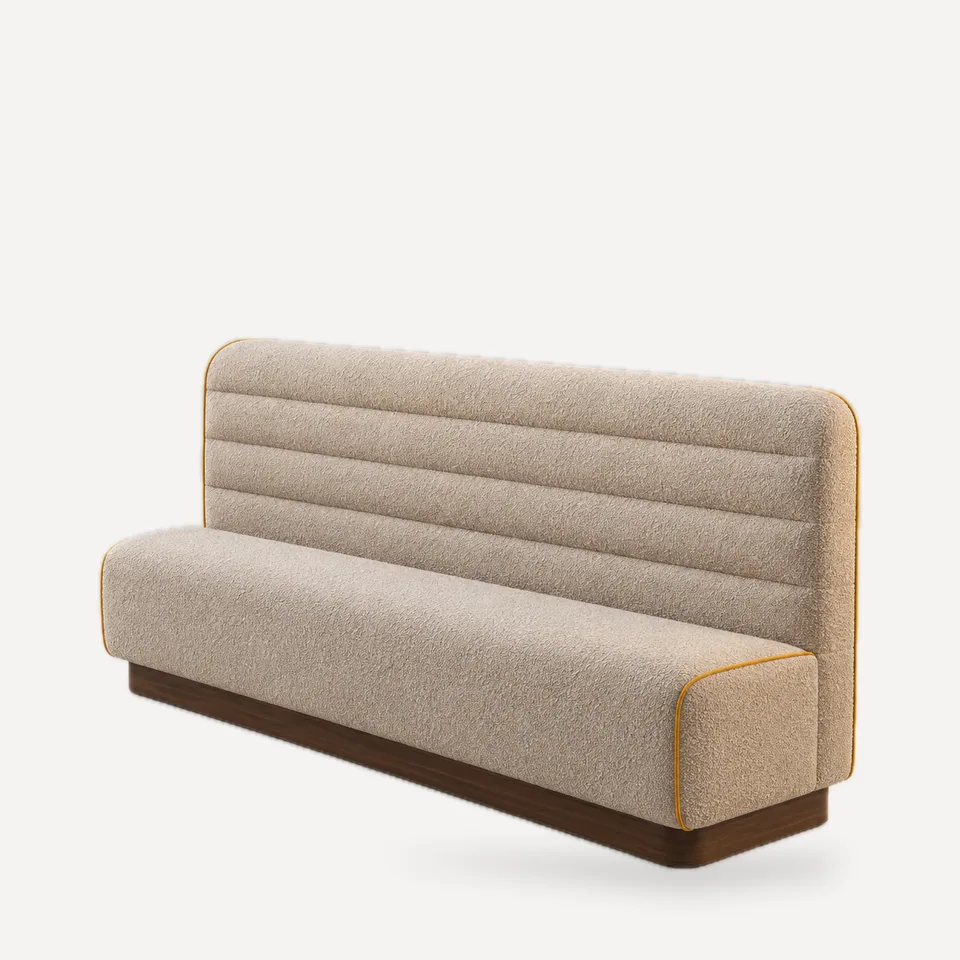
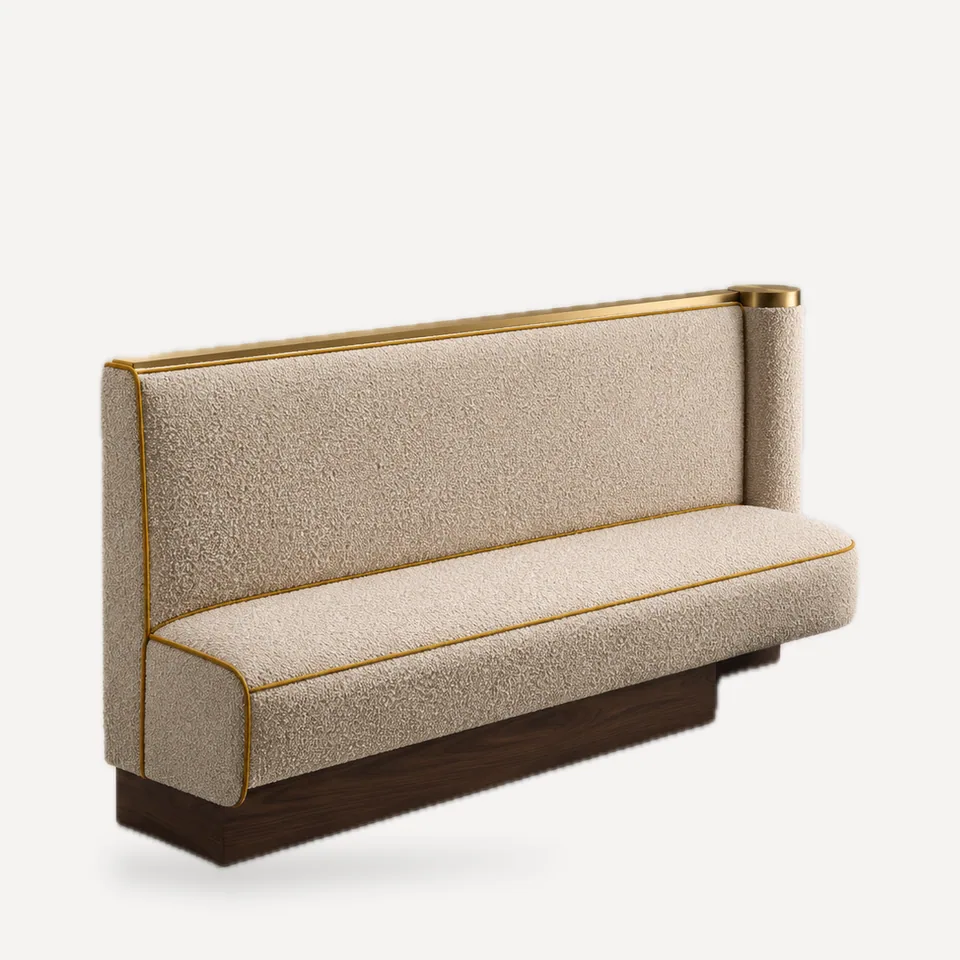
- Soft-radius ends for family rooms and food courts, with no sharp corners at a child's head height.
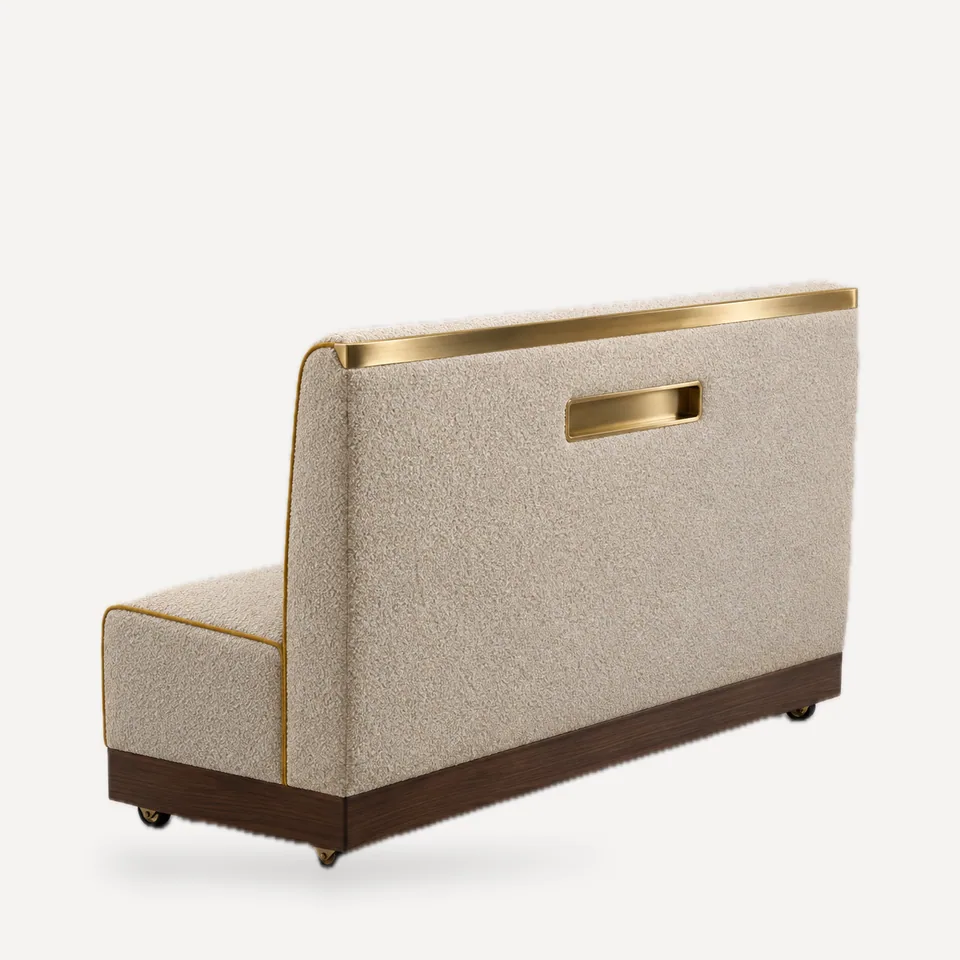
- Raised or recessed bases so mops reach underneath, and hidden casters where booths must move for deep cleaning.
| Booth | Best for | Durability feature |
|---|---|---|
| Diner Biscuit Booth | Burger, diner and family concepts | Buttonless biscuit tufting; vinyl wipes clean |
| Endguard Walnut-End Booth | Airports, malls, high-traffic aisles | 1.2 in (3 cm) solid walnut end panels |
| Softcorner Family Booth | Family dining, food courts | Rounded corners on back, seat and base |
| Zip-Swap Booth | Multi-unit programs | Zip-off covers on seat and back |
| Open-End Access Booth | Accessible seating at booth runs | Open end with 35 in (90 cm) wheelchair space |
| Roll-Out Booth | Rooms cleaned deep or reconfigured | Hidden casters and a push handle |
Specify contract vinyl with a published cleaning guide; many are formulated for diluted bleach or common disinfectants. We also specify fire-retardant foam and covers to the destination market's rules on request. For multi-unit programs, keep one cushion set per 20-30 booth seats in storage; it is the cheapest insurance in a seating budget.