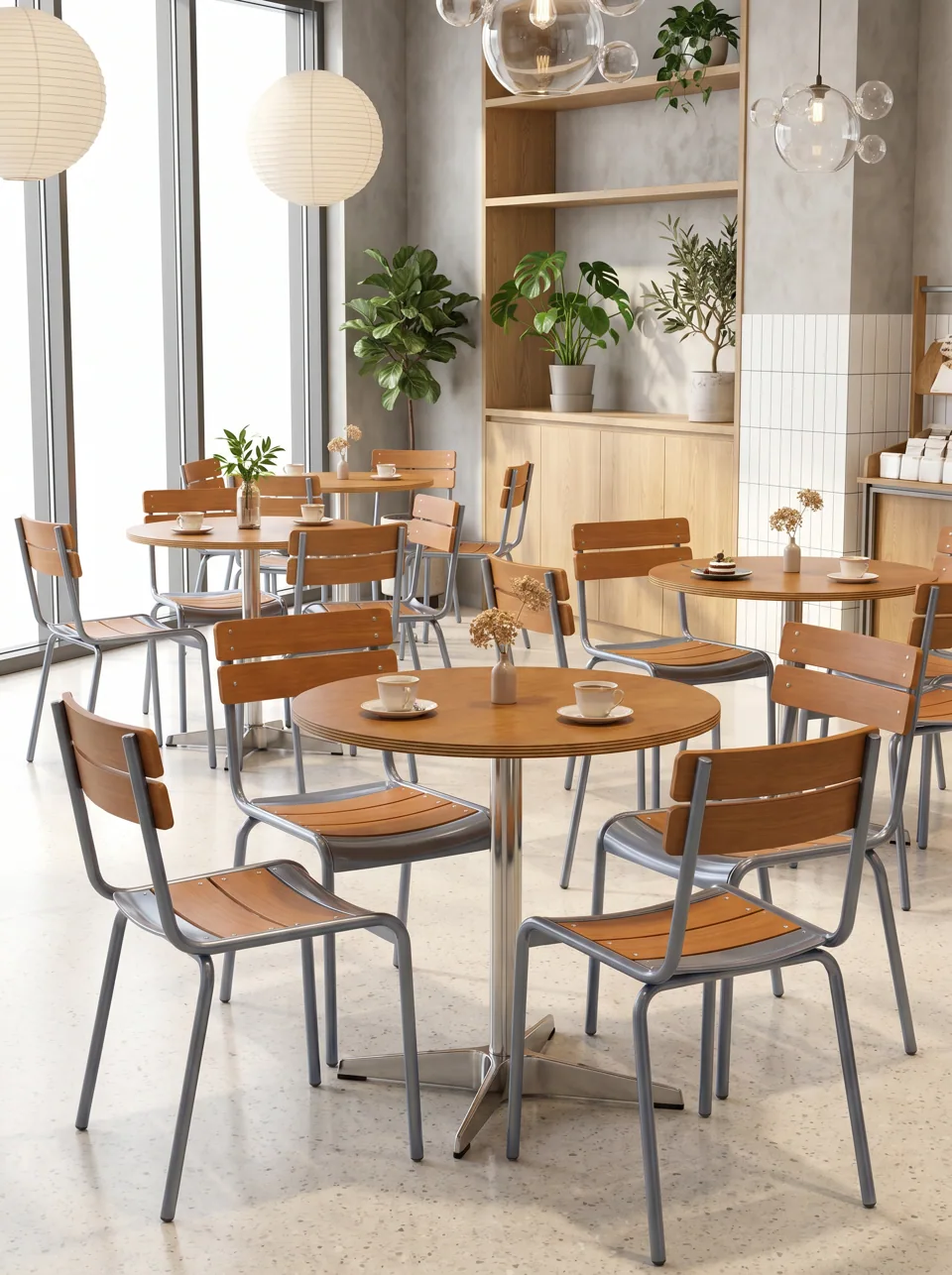
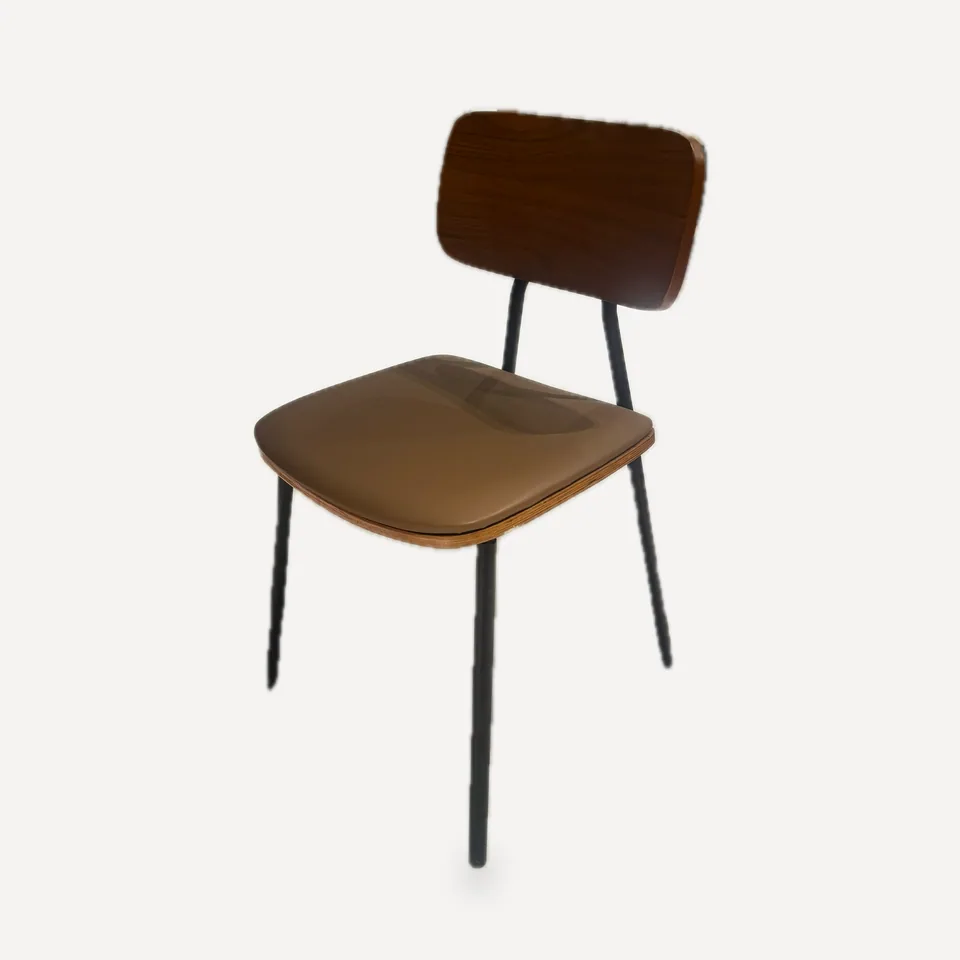
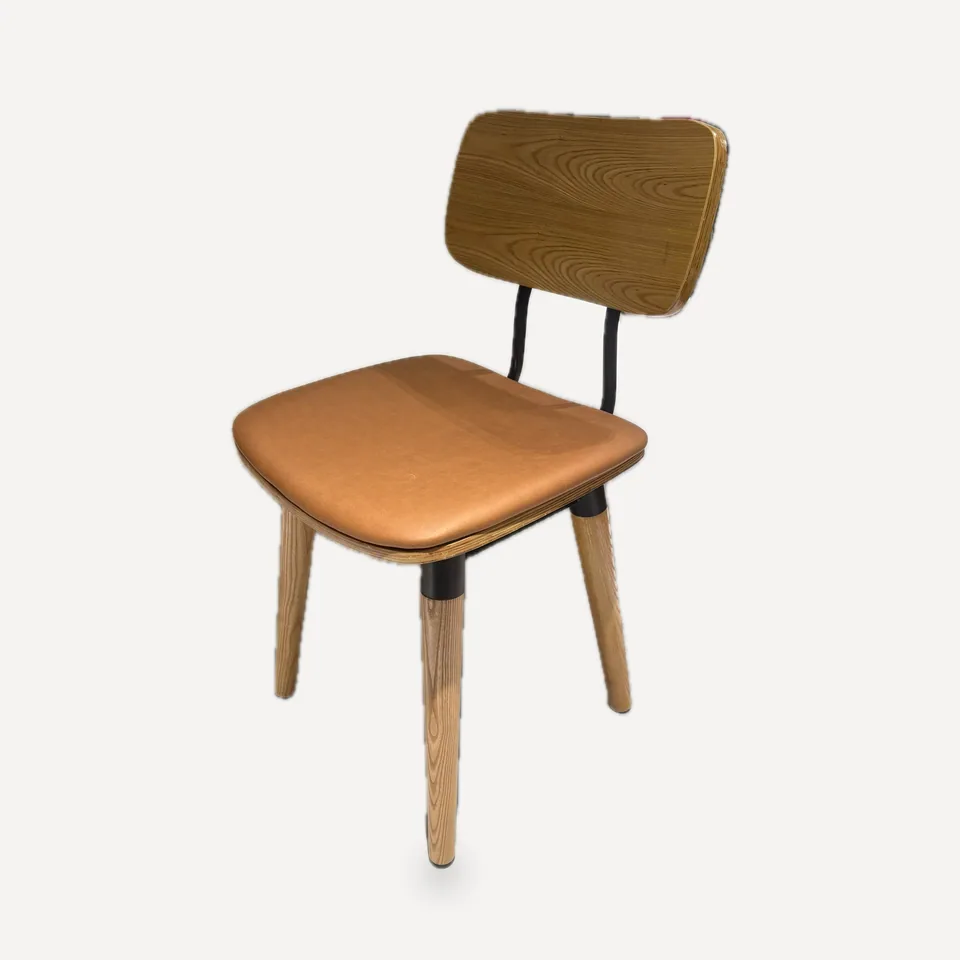
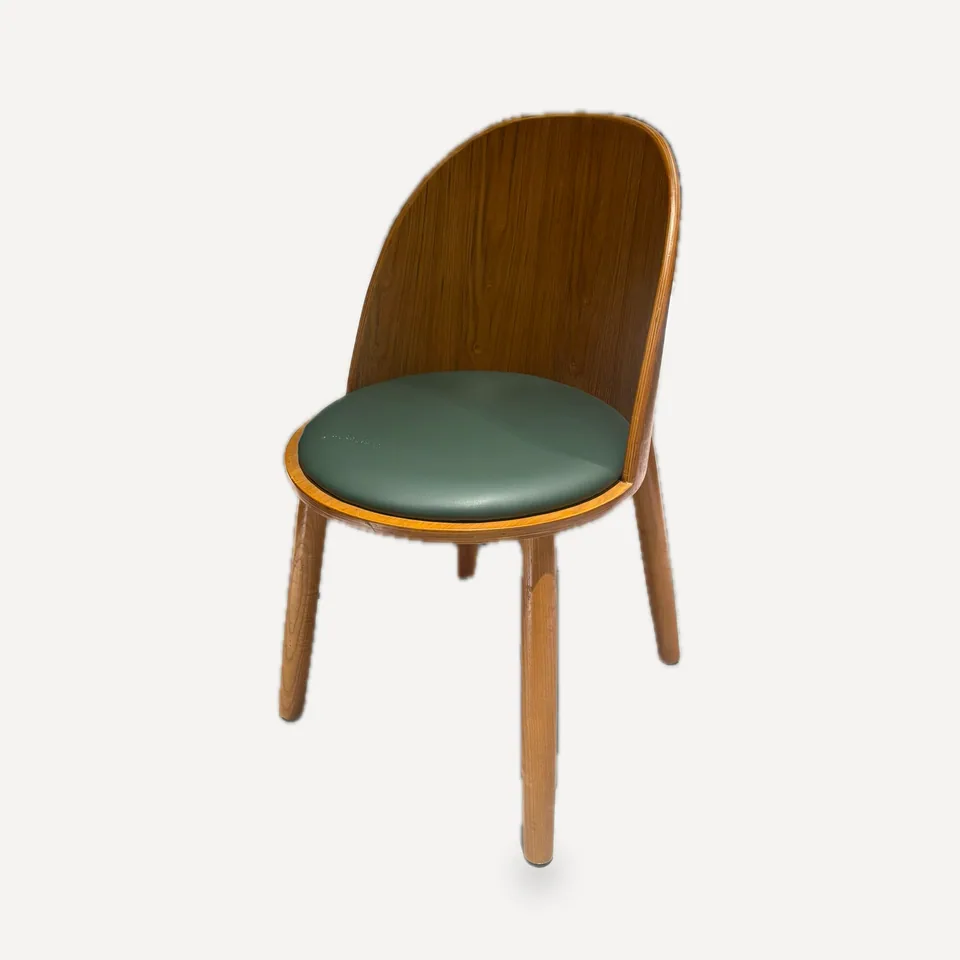
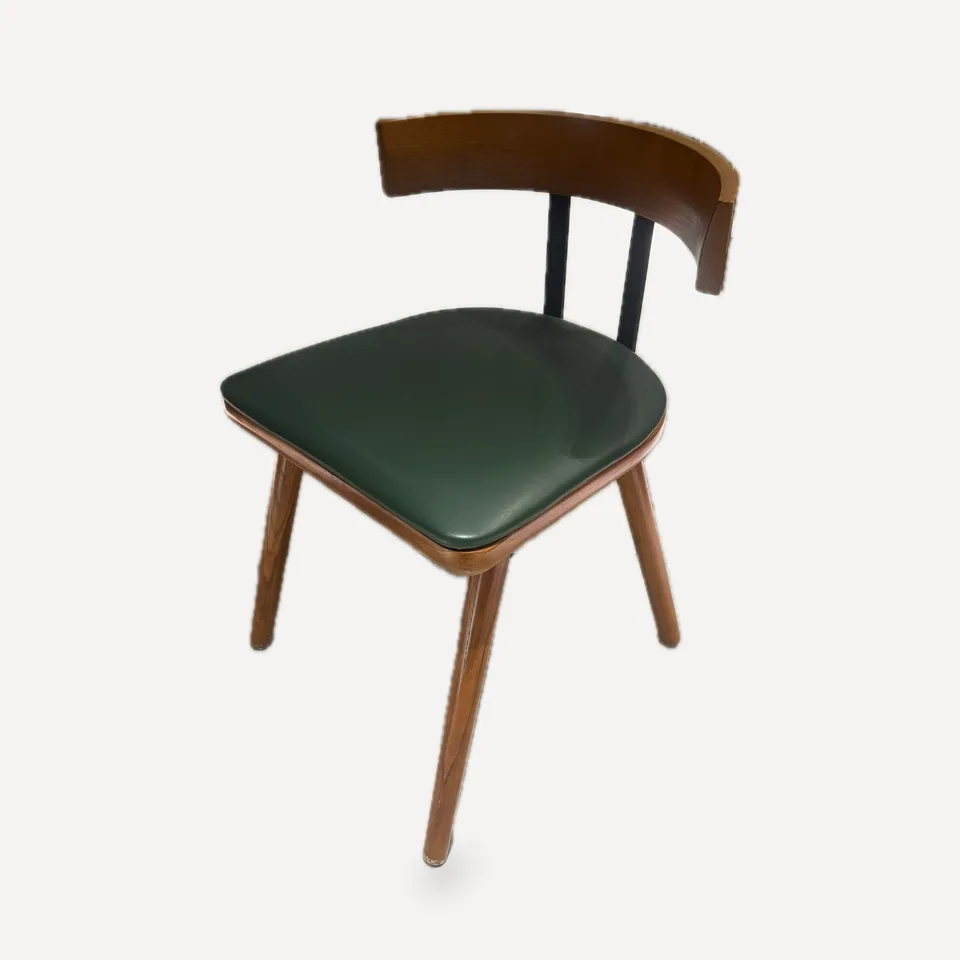
Loose chairs give a fast casual room its flexibility: two-tops push together, chairs pull up to booth tables, and the floor can be reset for a catering order. The chairs that work best in quick service share four traits: they are light (staff move them all day), wipe-clean, compact (narrow enough for 24 in of table edge per guest) and repairable.
| Chair | Frame | Seat | Weight class | Notes |
|---|---|---|---|---|
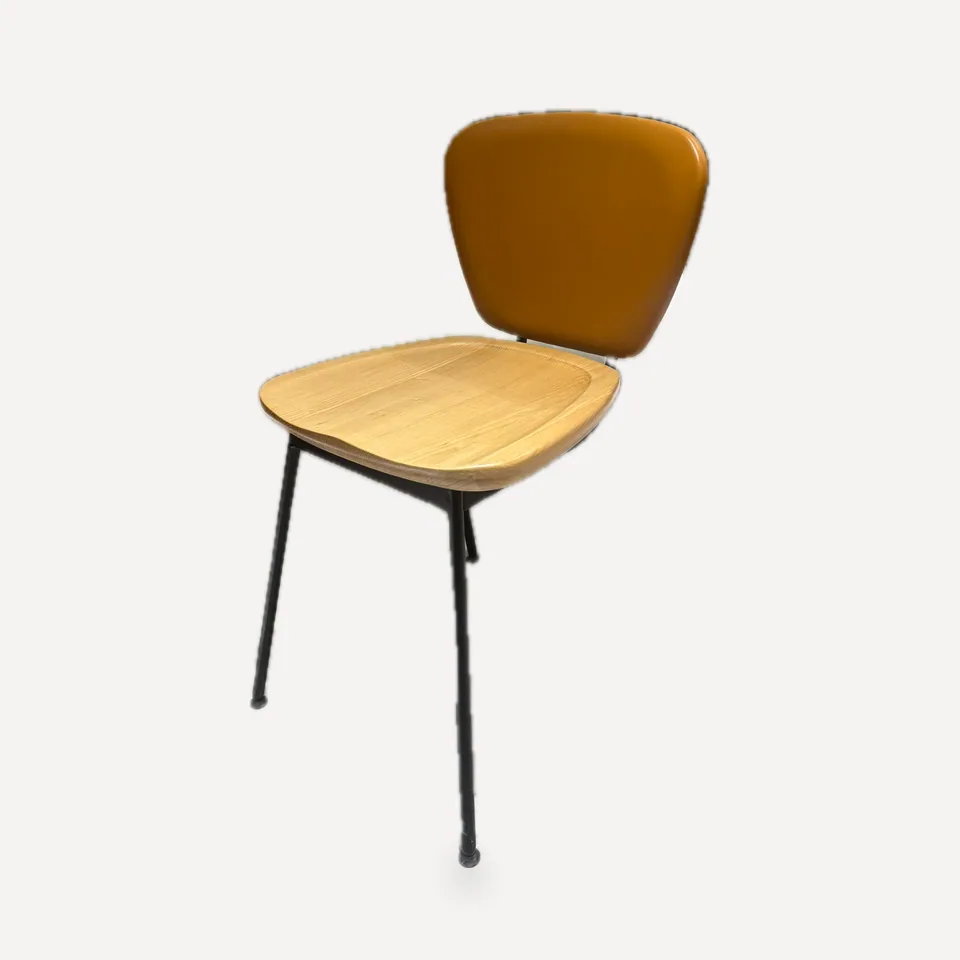
| Lane Ply-Seat Chair | Steel | Molded ply seat, padded back | Light | No seat upholstery to stain |
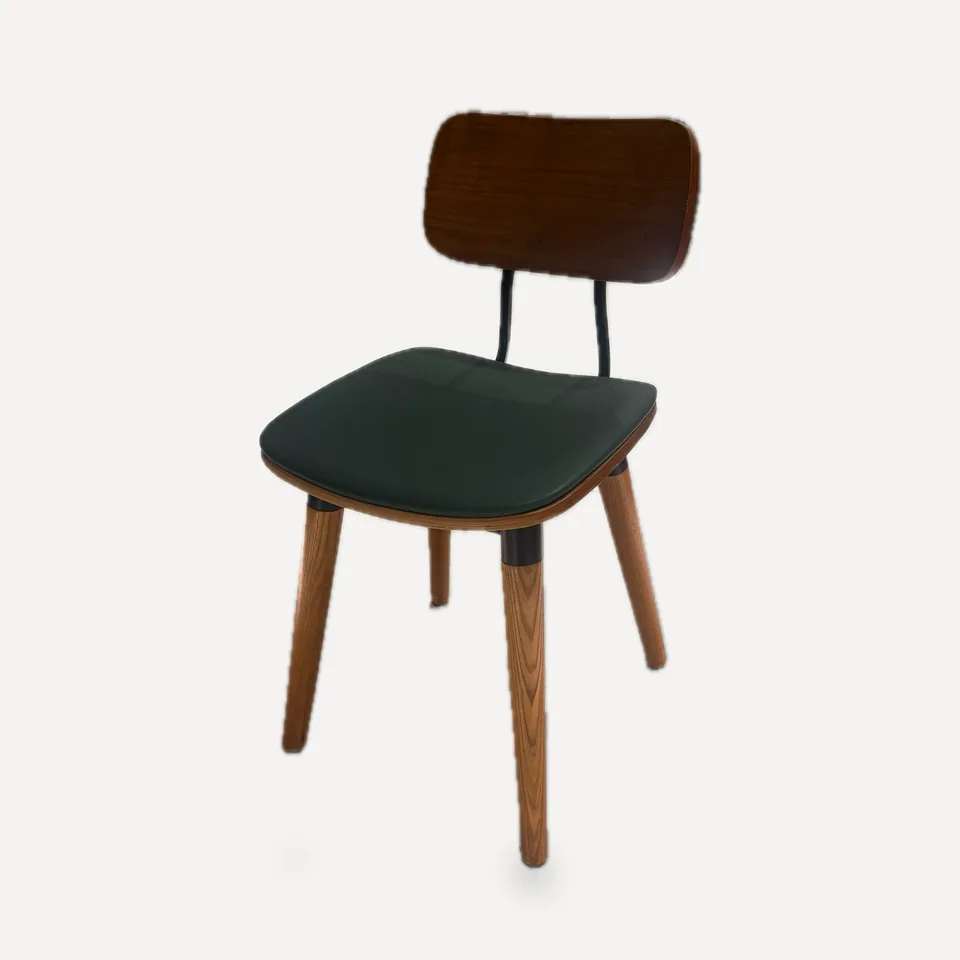
| Pivot Cafe Chair | Hardwood | Vinyl seat, ply back | Light-medium | Warm look, easy recover |
| Pivot Steel Chair | Steel | Vinyl seat, ply back | Light | Same look on slim steel legs |
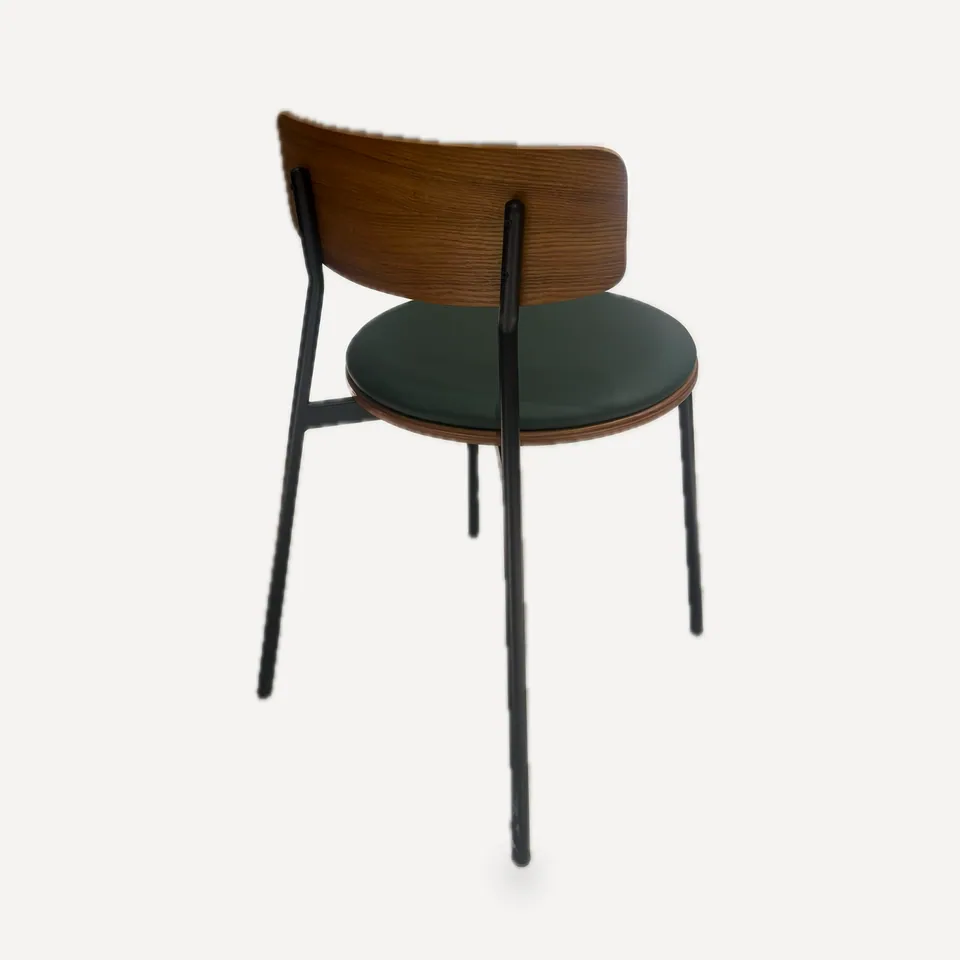
| Slate Steel-Leg Chair | Steel | Vinyl seat, curved ply back | Light | Compact footprint |
| Rail-Back Ash Chair | Hardwood + steel brace | Vinyl seat, ply back | Medium | Steel back brace takes leverage |
| Scoop Shell Chair | Hardwood | Vinyl seat, veneer shell back | Medium | Wraparound back |
| Arc Rail Chair | Hardwood, steel back post | Replaceable vinyl seat pad | Medium | Open rail back, warmer look |
Specifying for speed. Choose vinyl seats over fabric on loose chairs; keep seat upholstery flat without piping in the sitting area; choose a seat that unscrews from below; and match glides to your floor (nylon on tile and sealed concrete, PTFE or felt on wood). Order 5-10% spares per model, minimum two.
Height and fit. Seats sit at 18 in (46 cm) for 29-30 in tables. Overall widths stay around 18-20 in (46-51 cm) so a 24 × 30 in two-top seats two without crowding.